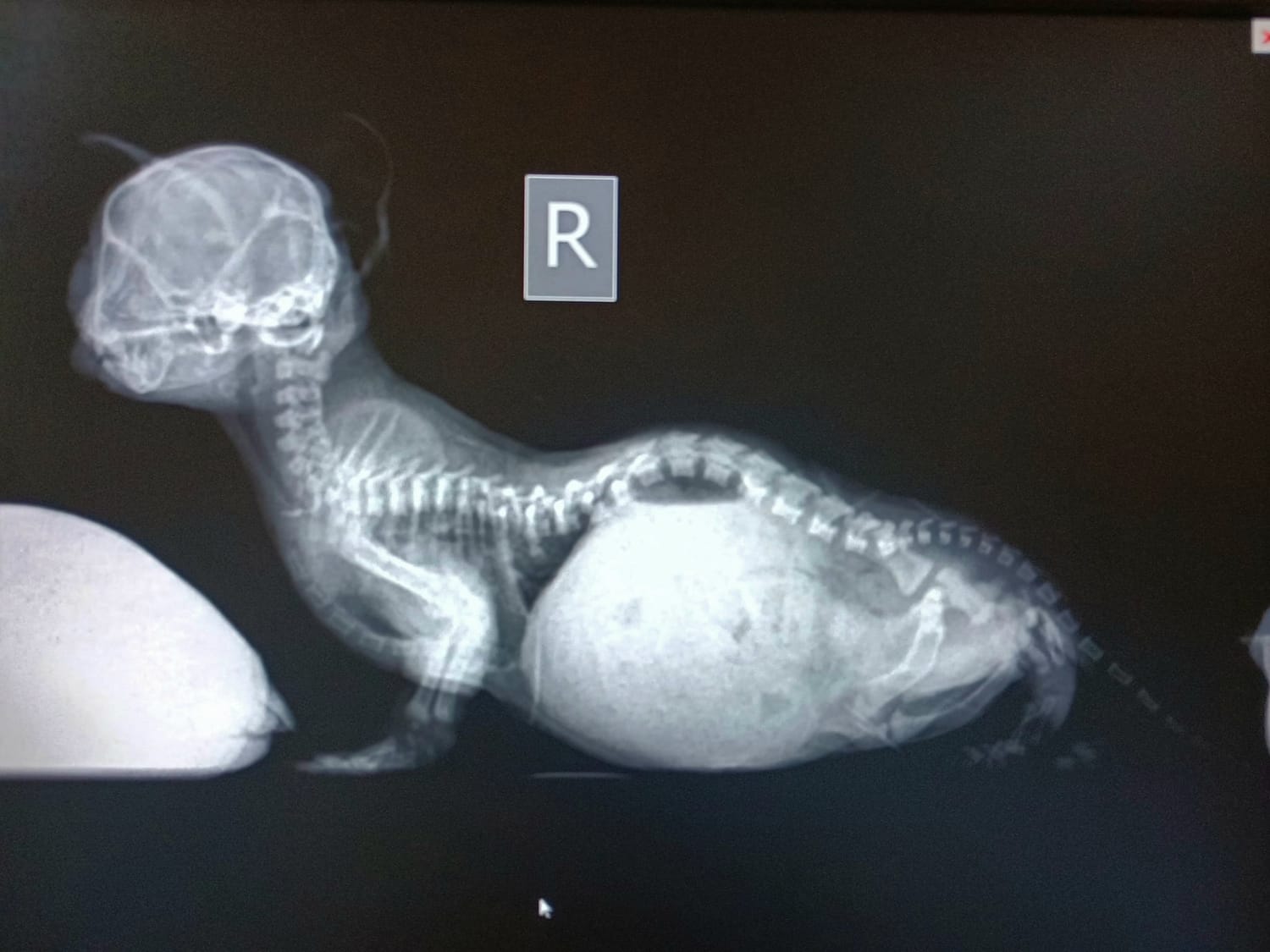
Saving Suzi The Deformed Kitten
Sad beginnings...
Suzi's rescue journey began when her mother was first rescued by the RSPCA (Royal Society for the Prevention of Cruelty to Animals) Wiltshire Mid Branch. She was heavily pregnant, in poor health, living in grim conditions where inbreeding and neglect was taking place. Another local cat rescue offered sanctuary for her and other sickly cats who were rescued from the same household. She could now begin her road to a happier life and was named Primrose.
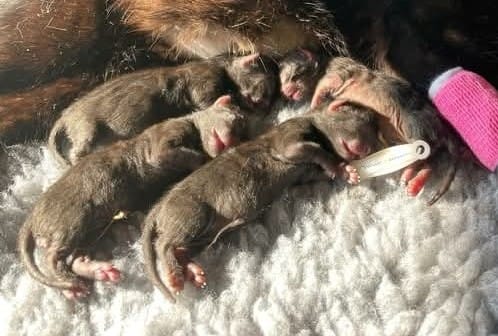
Unfortunately, Primrose was very unwell and soon went into premature labour. Her condition plummeted and neither her nor her unborn litter were going to survive without emergency an emergency C-section. Tragically, Primrose did not wake from her operation, and she never had the chance to experience finding her forever home where she would be cherished.
Things were not looking good for her four kittens either. Premature and lifeless, they required extensive resuscitation efforts. Slowly but surely, the litter began to show signs of life...but these babies now had no mother and were not ready to be born. To make matters worse, Primrose's babies were also deformed due to being inbred. One kitten died shortly after being born and the RSPCA and local cat rescue knew these kittens required specialist care if they had any chance at survival.
A team effort...
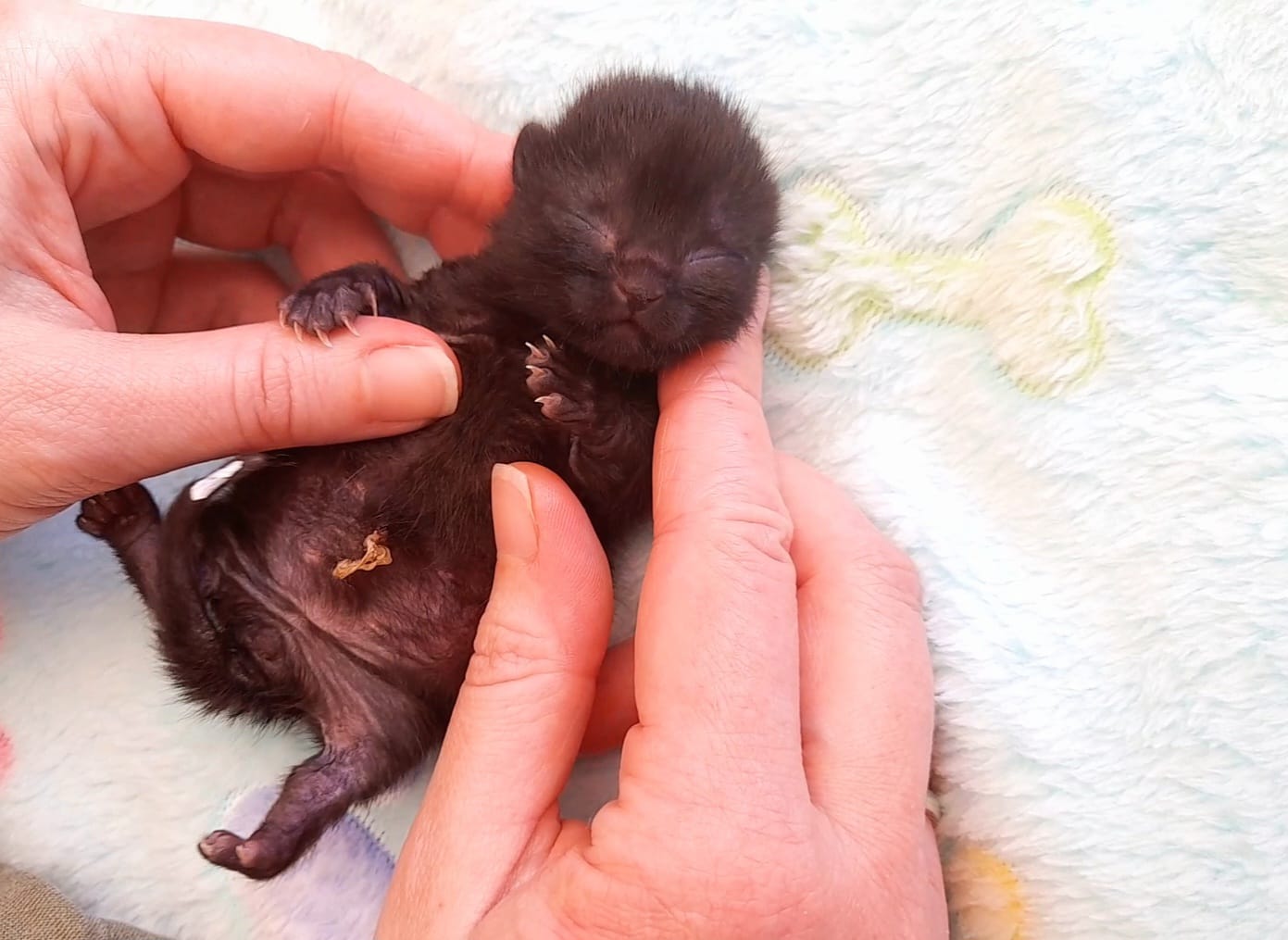
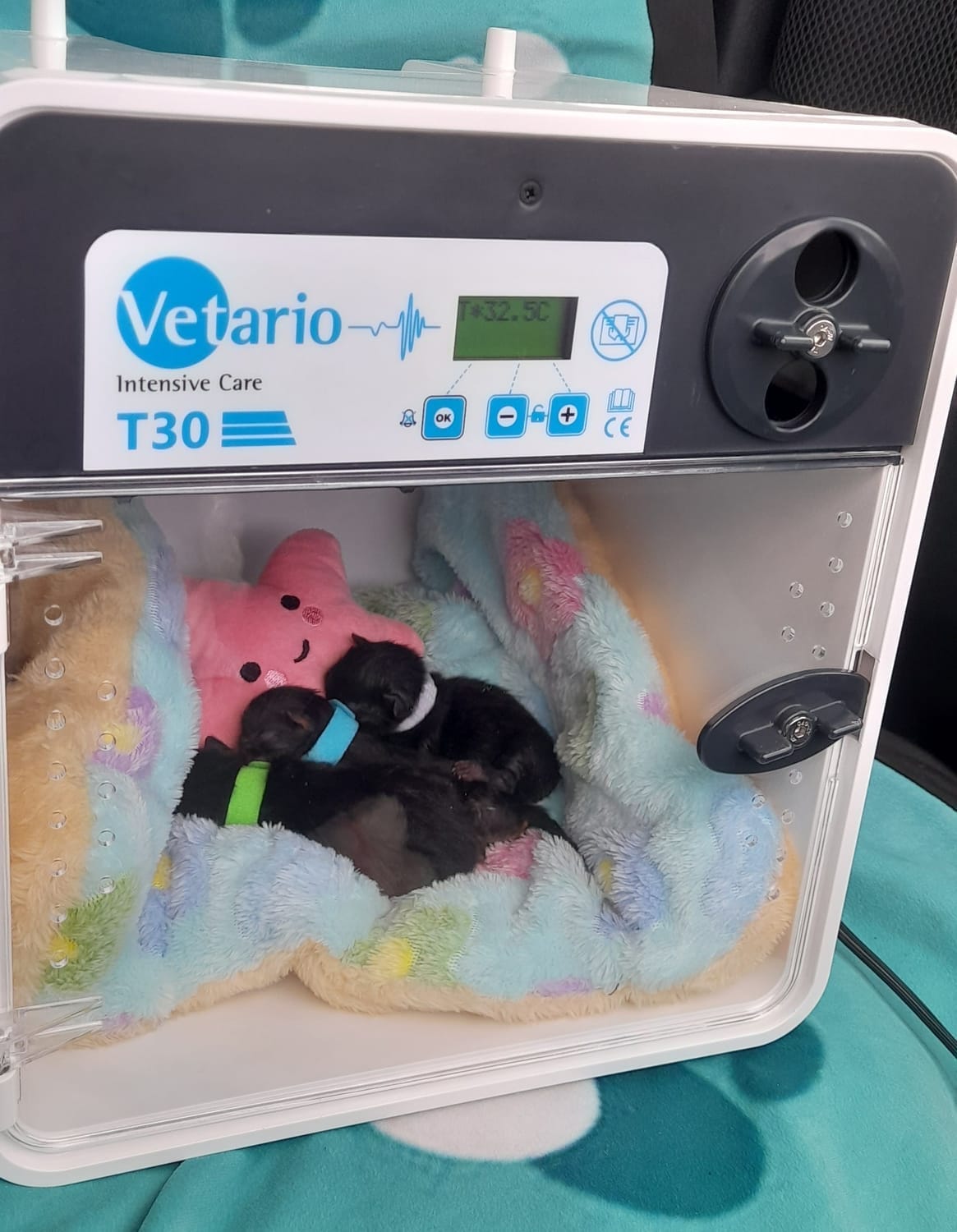
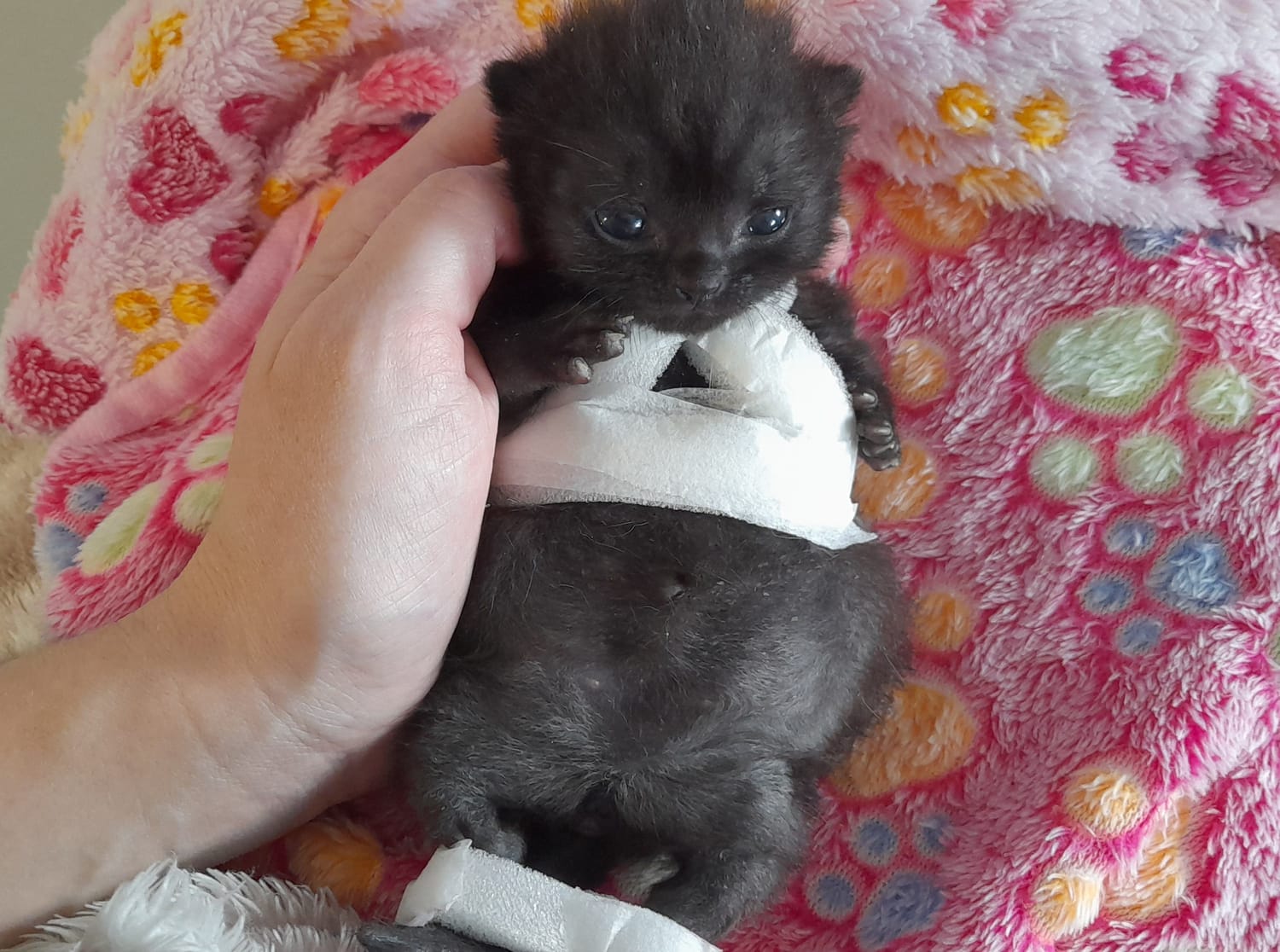
This is where I was contacted by a vet friend who performed Primrose's surgery. She had taken the kittens home as had an incubator and oxygen; the kittens were not in good shape and needed all the help they could get. After liaising with the vets, the RSCPA and local rescue, we formulated a plan for the kittens and I took them home to try and save. Upon collecting the kittens, I could see they were smaller than full-term new-born kittens, had diarrhoea and were hypothermic. The most deformed kitten had a strange body shape, appearing bloated with deformities and shortness of all 4 legs. This was the kitten I had the least hope for, it looked as if her legs had been put on back to front and it did not appear as though she could bend or place her legs and paws in a normal fashion.
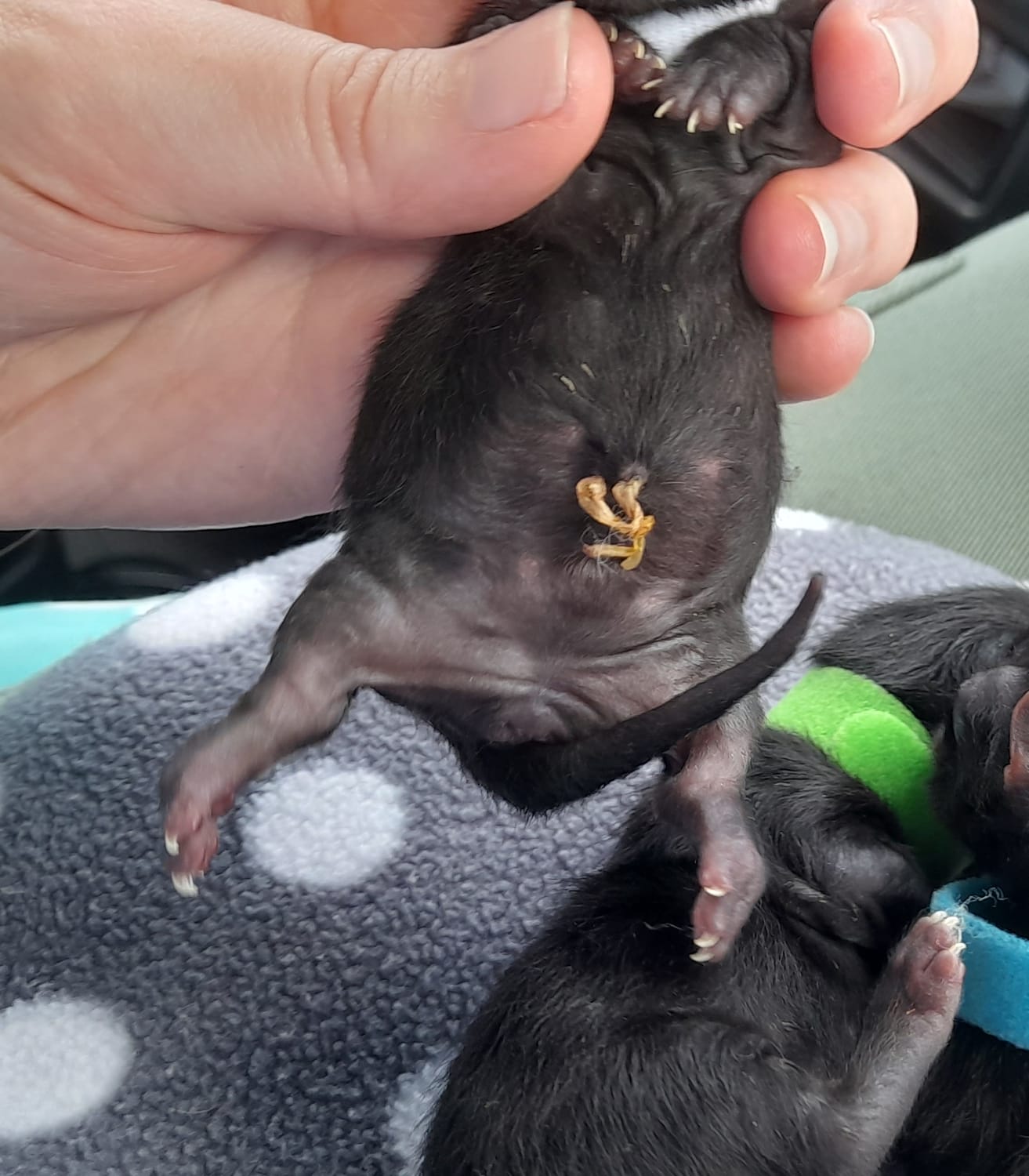
Sadly, before long it was clear these kitten's prognosis was just as grim as we had anticipated. They required oxygen supplementation, nebuliser treatments, tube feeding, glucose, injectable fluids and higher incubator temperatures. More worryingly, these kittens were not able to digest any strength of formula without experiencing diarrhoea. The kittens were also exhibiting signs of infection so we started antibiotics. Over the next 48 hours, two of the three remaining kittens passed away despite every effort to save them. Their remaining sibling however (the most deformed kitten) was holding on. I had actually sent a message the day before to say I thought this kitten was not going to survive the night! It seemed a miracle that she had somehow managed to survive longer than her littermates, and at just 59 grams in weight. Healthy new-born kittens typically weigh between 85-110 grams. To put her size into context, this kitten was so tiny that she was about the same size as a cotton bud. This made it difficult to determine what gender she was, we even called her Evan in the first few days because we thought she may be a boy (sorry Suzi!).
The Suzi saga continues...
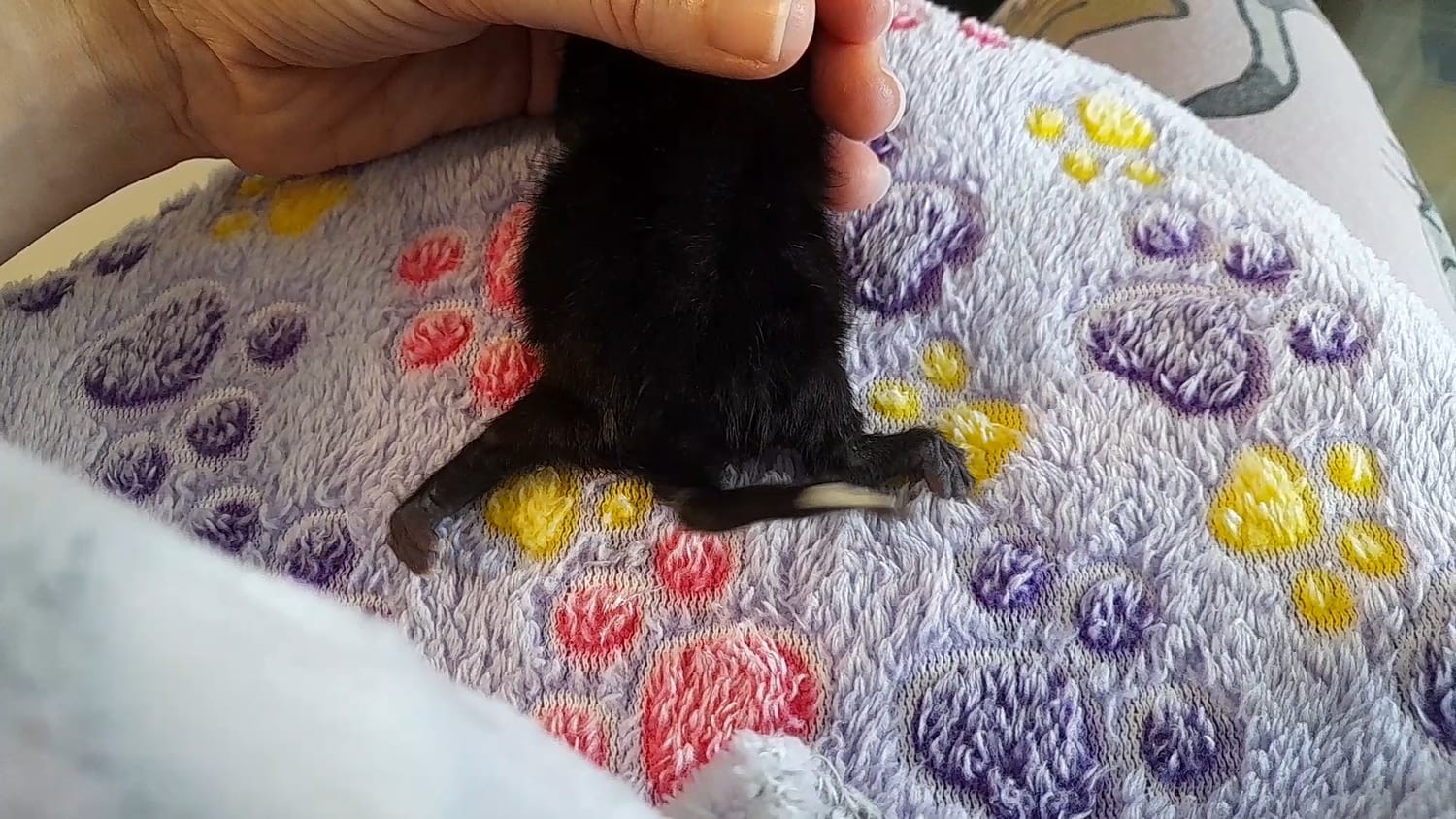
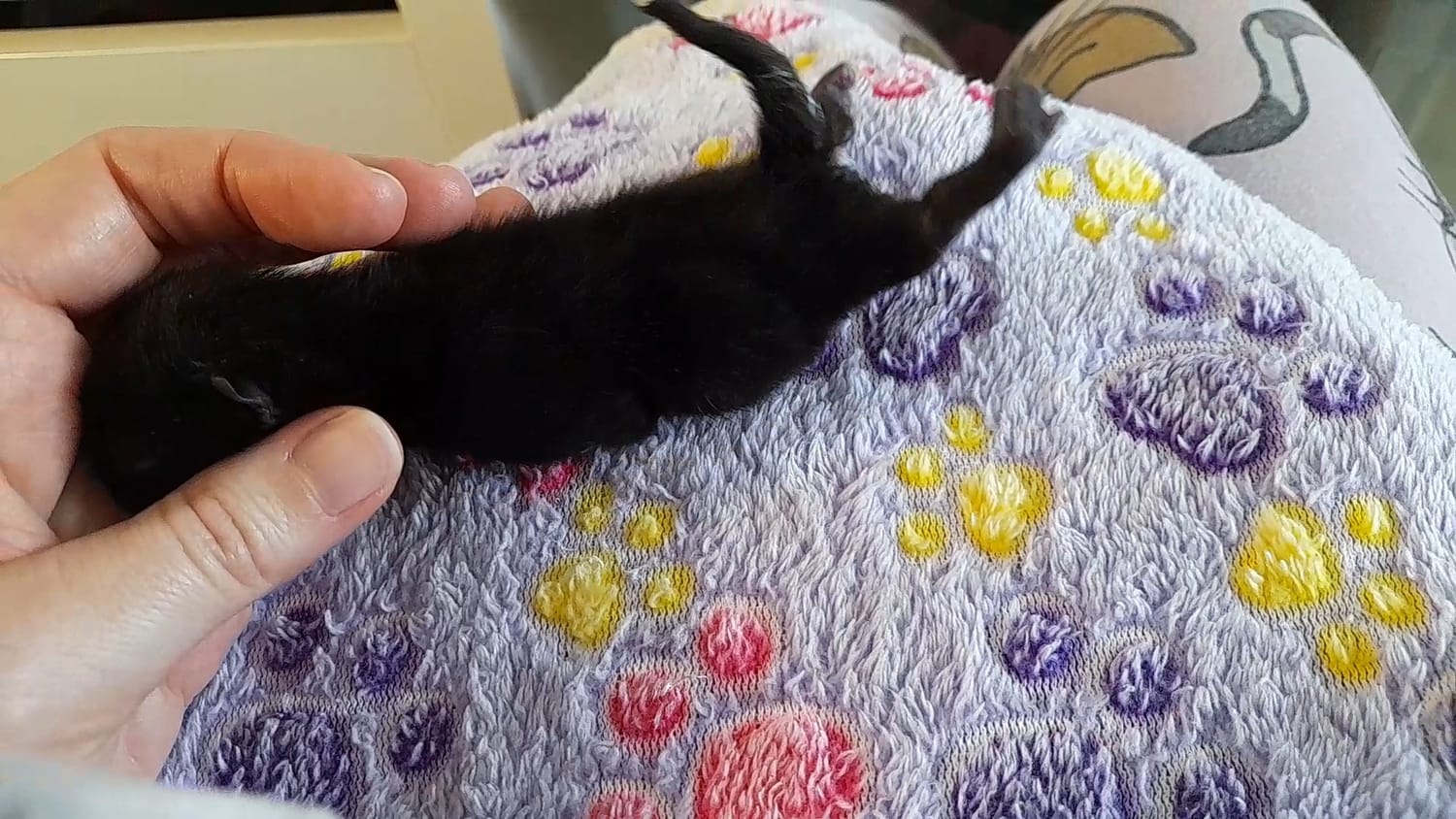
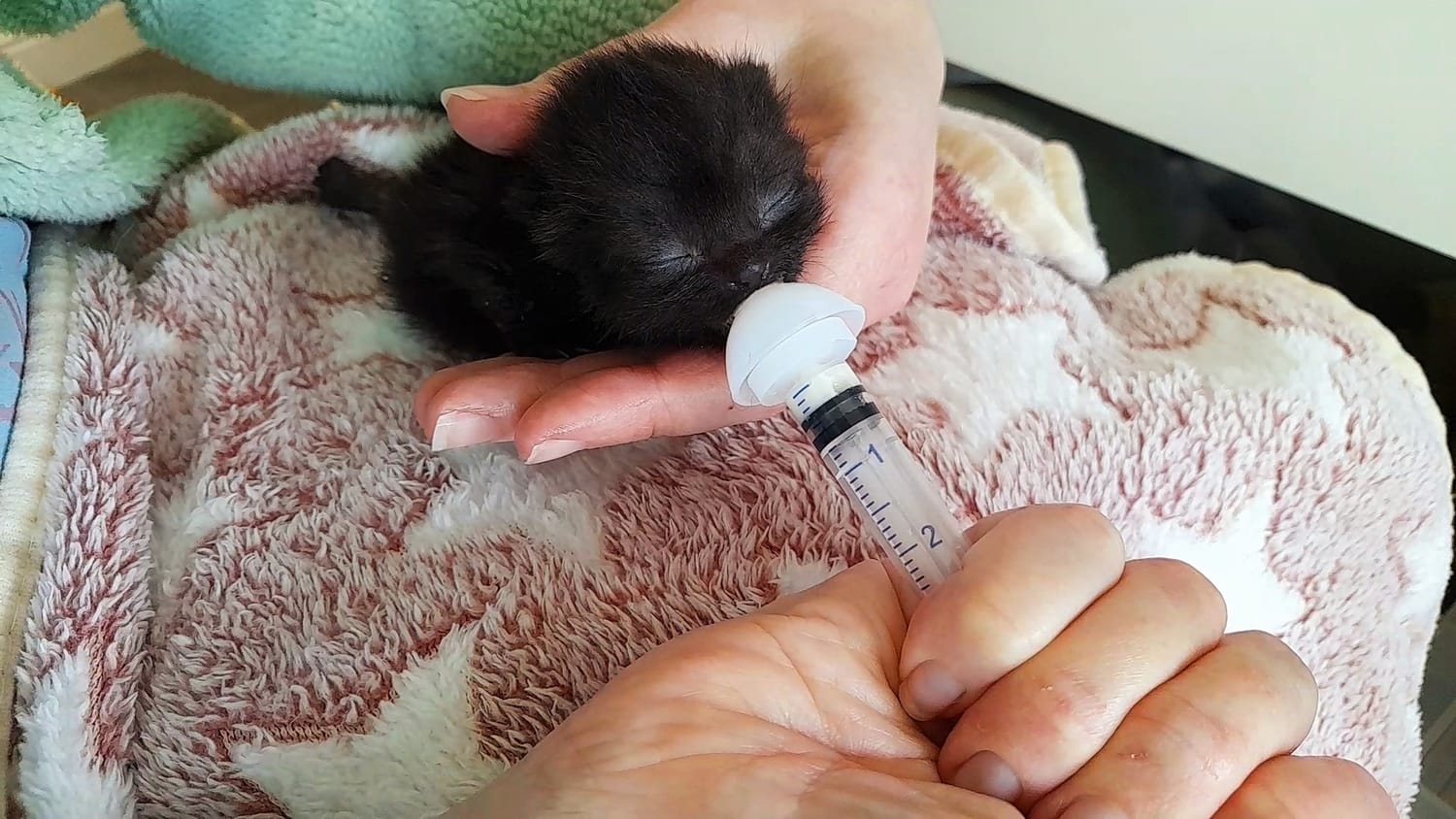
Over the coming weeks, Suzi had the ultimate "will she or won't she make it?" battle. She had a serious problem gaining weight due to the fact she could not seem to digest formula, despite the fact she wanted to feed and no longer required tube feeding. Every time we tried to increase her formula, she would experience diarrhoea which is extremely dangerous in tiny kittens and can be a death sentence in itself. Diarrhoea is a complication many premature neonates struggle with. However, with her bloated tummy, there was also concern over a more sinister cause for this. We even sent away faecal samples to a lab to try and grasp how we could help Suzi's tummy trouble. I am so grateful to have had the support and efforts of the vets who not only helped Suzi come into the world, but also researched into medications and ways we could improve her digestion. Somehow, with lots of trial and error with pre/probiotics, different antibiotics and finally a homemade formula, we were able to stabilise Suzi's faecal consistency and her weight gain began to reflect this.
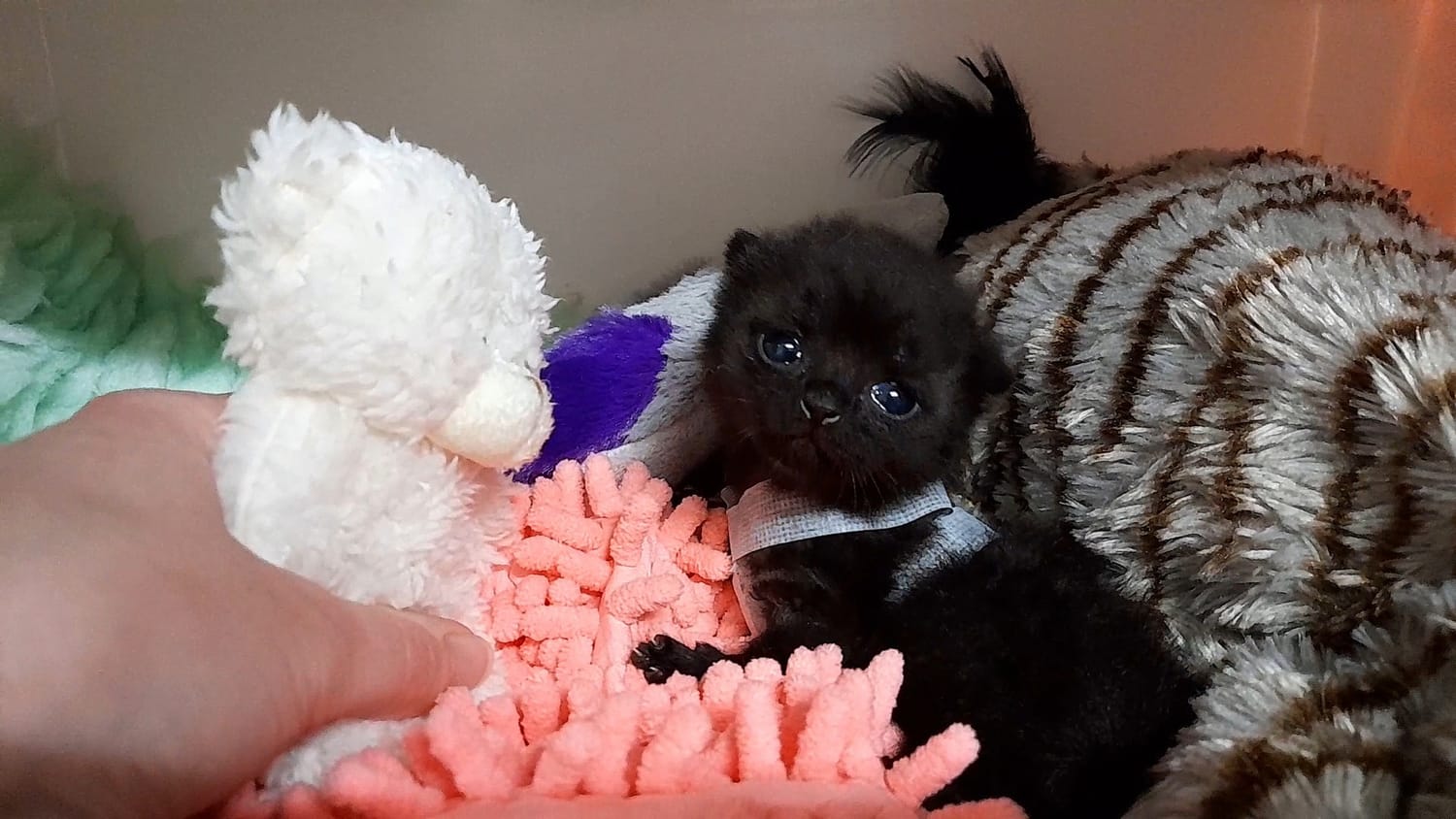
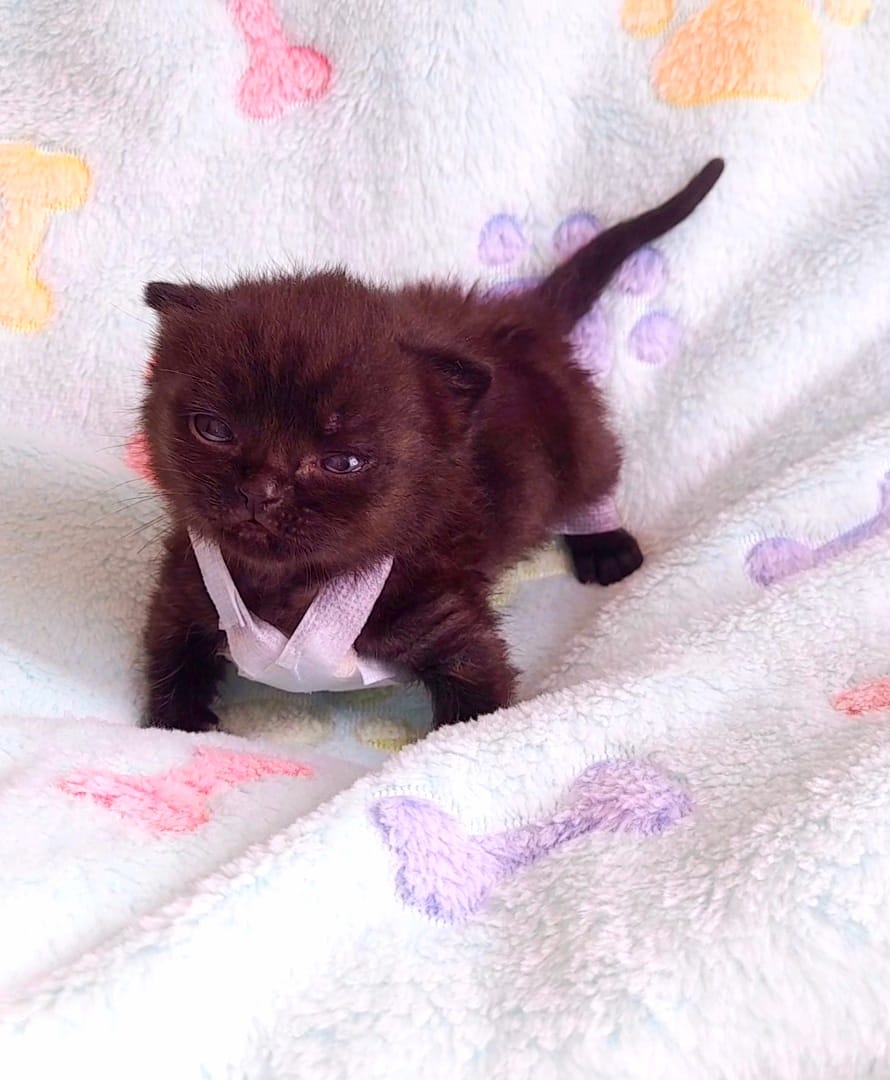
As well as managing her digestive difficulties, we also had to implement an intensive regime to try and resolve her skeletal deformities. Thankfully, kitten bones, ligaments and tendons are soft, meaning these types of deformities can be improved with early intervention (before the bones solidify.) This involved daily splinting of her chest and legs to try and correct their shape as well as physiotherapy every 2 hours ... yep, every 2 hours day and night Suzi was fed, toileted and had a physiotherapy session.
This was pretty tough for Suzi since she had all four legs and her chest in tape and splints which could not have been much fun. Having said that, if this was not done for Suzi, she would have never been able to walk and her chest deformity would have compressed her heart and lungs, making it harder for her to breathe and ultimately, given her a much poorer prognosis.
A happy ending...
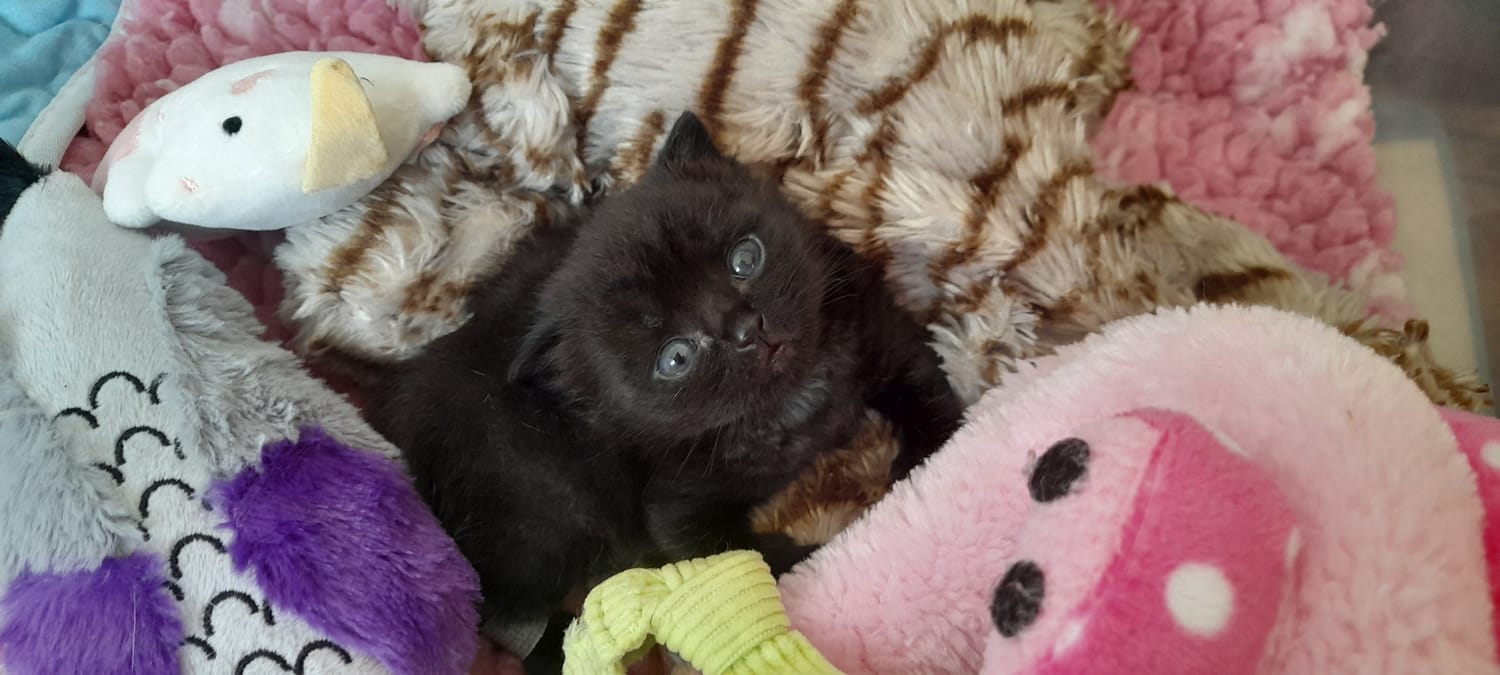
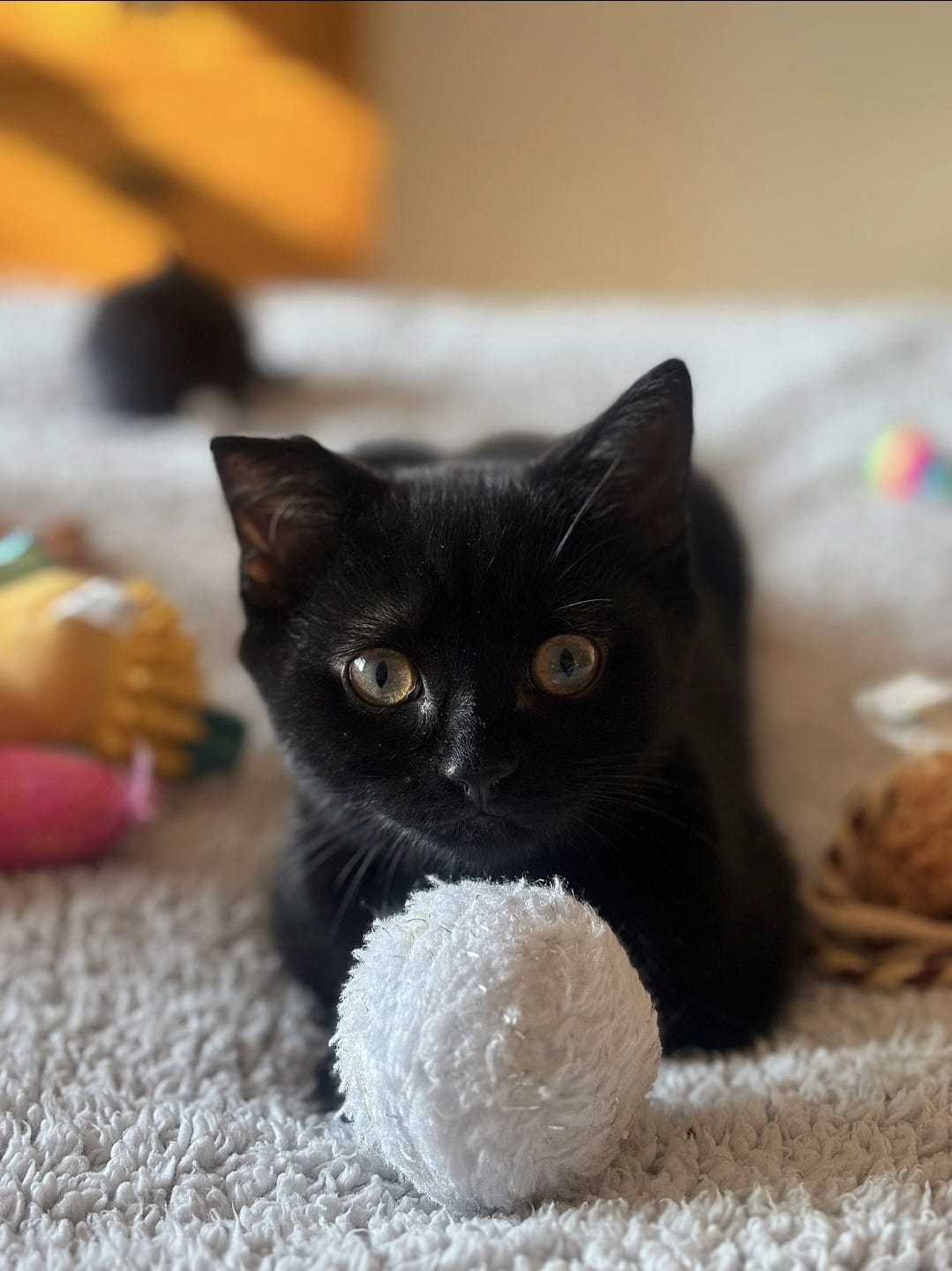
To everyone's relief, Suzi, albeit a strange shape and size, seemed to start thriving and have all the abilities any other kitten would. My main concern with Suzi's legs was that she would never be able to use a litter tray. Her legs were literally back to front, but the magic of intensive physio and tailoring her leg tape really did work wonders. I describe the leg taping and splints a bit like braces re-shaping teeth. Before long she was playing, running, jumping and ready for her next chapter. Suzi no longer needed my help and at 9 weeks old was ready to be fostered by a local RSPCA volunteer where she soon became a failed foster! Suzi has remained "quirky" and still has short legs and a bent ear, but she appears to have no problem in living life to it's fullest.
Sadly, cases like Suzi don't always have such a fantastic outcome. Most of the time, premature puppies and kittens are not given the specialist care they require and usually pass away. Those with limb deformities are often left without treatment for weeks if not months. Heartbreakingly by this point, corrective physiotherapy and splinting regime is more gruelling, emotionally taxing on the puppy or kitten and less likely to be a success; with surgery often being a last resort. Suzi did not require any surgery and was able to start walking by 5 weeks of age.
The main reason I wanted to write a blog about Suzi's story is to show that these kinds of deformities can have successful results with early treatment. Even the most severe cases can have a positive outcome and I would urge anyone that has a kitten or puppy with a limb deformity to seek specialist help as soon as possible.
Some words from Jess @ RSPCA Mid Wiltshire Branch
"We knew she was special and my gosh did she put up a fight. Her legs faced the wrong way, her body wasn't formed as you'd expect to see a kitten but we all knew we needed to give her hope, and that we did. Seeing her now so happy really cements in why we do what we do; we are the voice of the animals who cannot speak for themselves."
Some words from Suzi's owner
"Suzi came to me as a foster, but she quickly became so much more. She may be disabled, but nobody told her- she's just pure love, energy, and just the right amount of spicy attitude. She bonded deeply with my four cats and before I knew it, she wasn't leaving ... Suzi became my happiest foster fail, now living her best life as part of the family."